
Step 4 of 7
The worker signs the request it sends
One worker requests six credits from the compute provider. An account name tells the provider where to charge them. To decide whether to act, the provider also needs to establish which worker sent this operation, what the scientist approved, and whether the request reached the intended service.
On the connection
- Method
- POST
- Execution path
- /w1/operate
- Connection
- HTTPS with TLS 1.3
Connect the tool client to the provider’s W1 endpoint
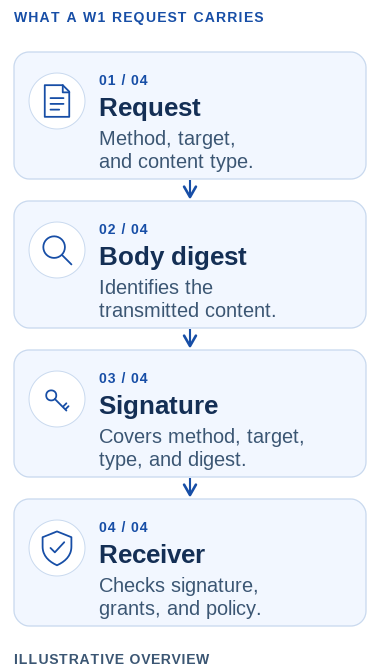
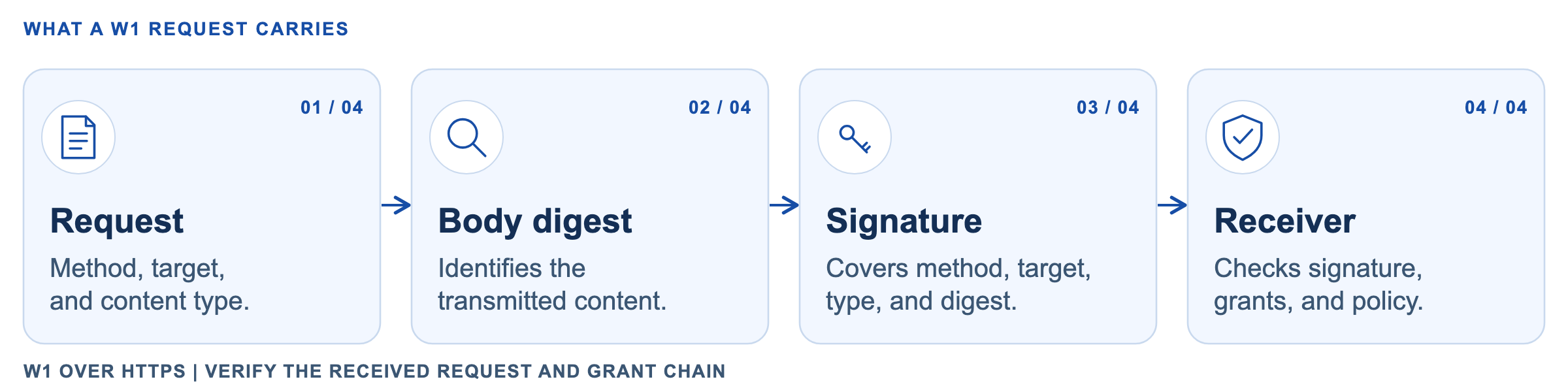
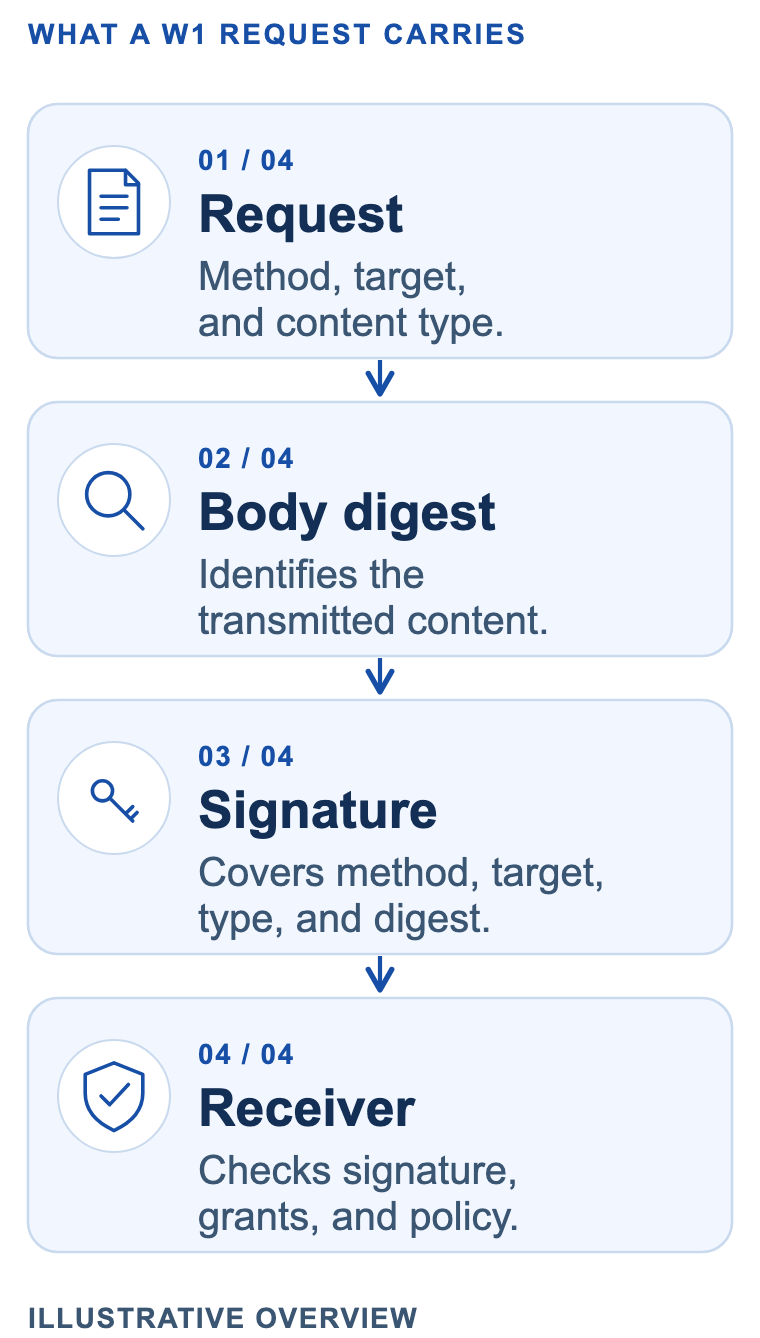
The client computes Content-Digest over the transmitted body and signs the HTTP method, target URI, content type, and digest with the worker’s Ed25519 key. The receiving API verifies the signature and body, then connects the worker to the signed chain of grants. The W1 draft defines the exact records that independently built clients and providers can exchange.
Inspect the signed W1 messageThe worker supplies proof bound to this action and its approved policy. An optional circuit integration can generate the proof. Explore the deployment choices
See how policy and single use are verified
Related specifications: TLS 1.3 · HTTP Message Signatures · Digest Fields · EdDSA and Ed25519