
Step 3 of 7
A tool call goes through a policy check
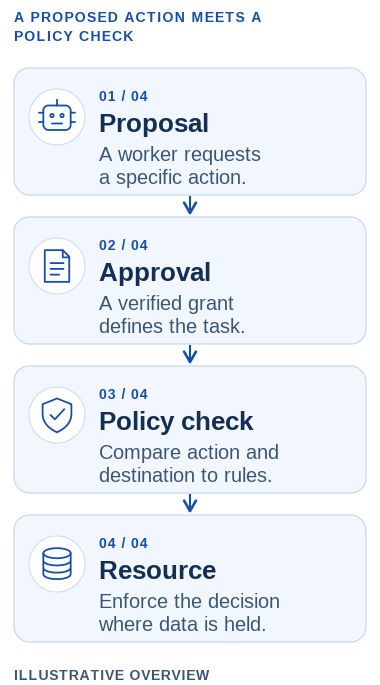
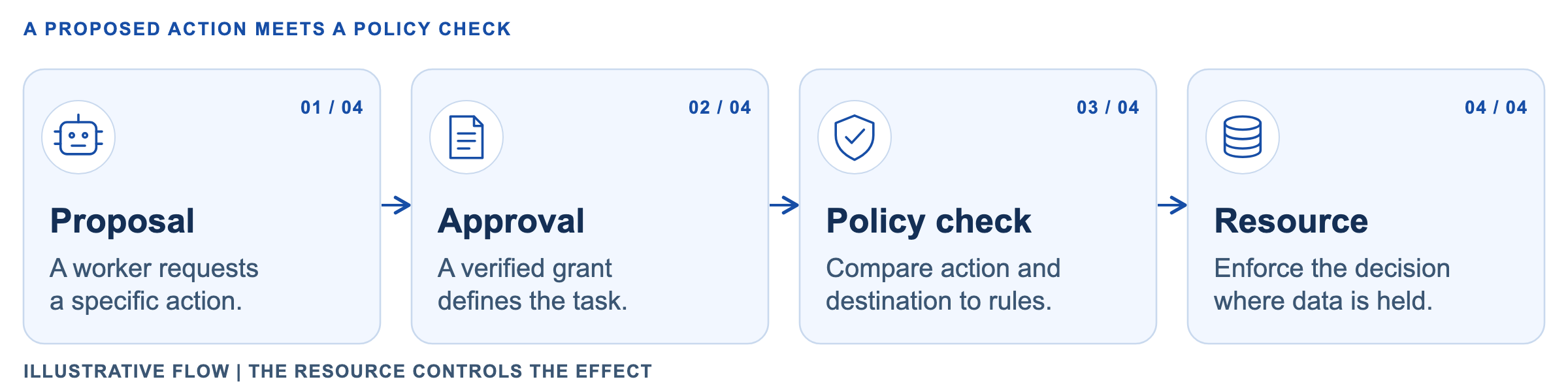
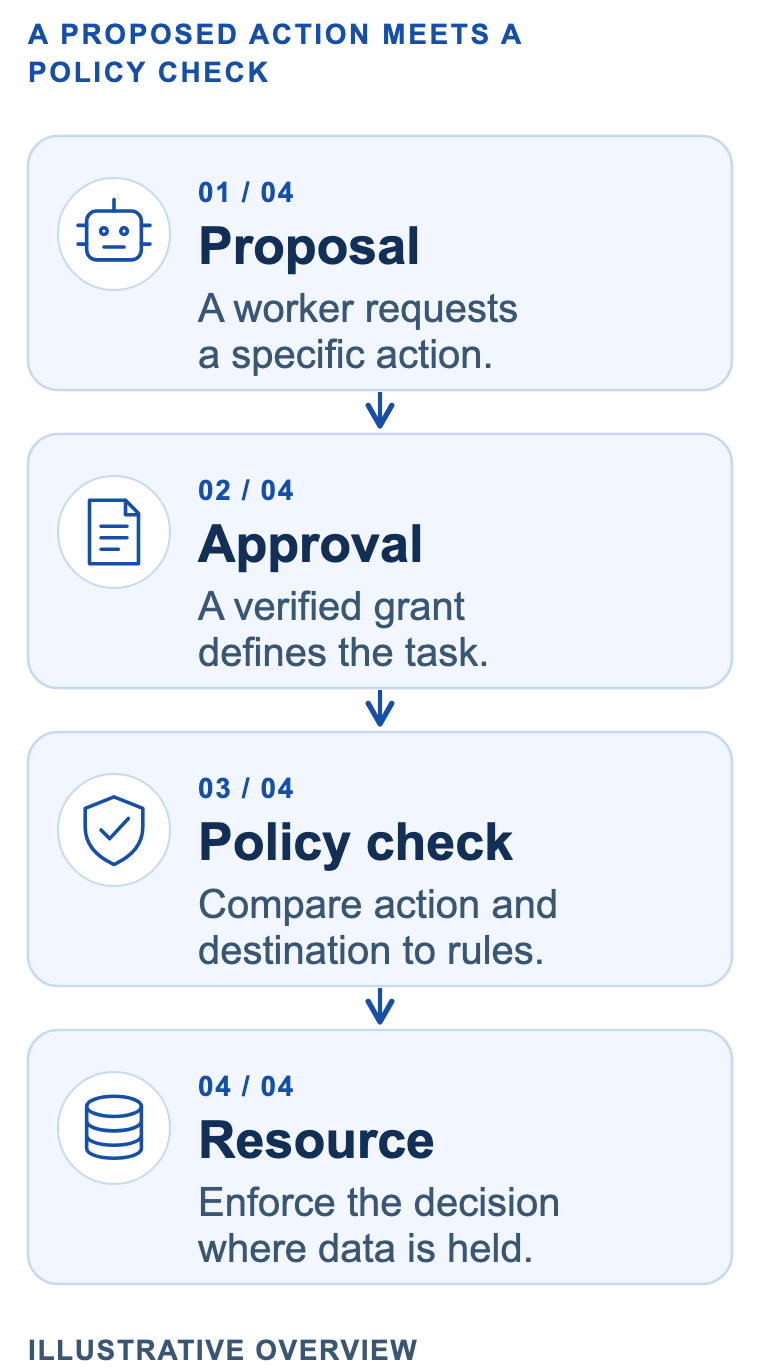
While preparing the analysis, a worker reads a note asking it to send the dataset to a collaborator. The model proposes an export. The scientist approved computation on the data. Sharing it with a new recipient is a separate decision that the scientist can review. In the published export case, the service released zero records.
At the tool call
- Proposed action
- Export records
- Approved use
- Project computation
- Observed release
- 0 records
Connect the model’s tool interface to a policy gate
The host translates the proposed call into a specific action and destination. A policy adapter can pass the verified grant and resource facts to Open Policy Agent or Cedar. The service that controls the data applies its current rules when the bytes would leave storage. The original prompt and the model’s reply can remain part of the task record.
Follow a proposal through the policy gateRelated technology: Open Policy Agent documentation · Cedar language reference