
How a policy gate checks a proposed action
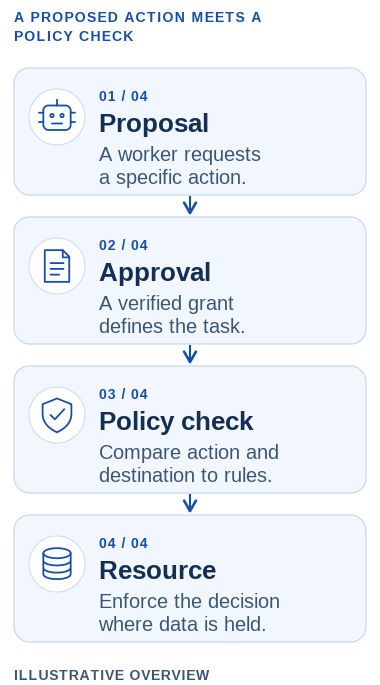
An agent can propose a command in fluent language. The program that executes the command controls whether it takes effect. The Rust example describes a gate placed between those two steps. Developers can implement the policy gate and signed request pattern under MIT. This Rust example illustrates a separately licensed circuit integration. See which component requires a circuit license
What the example records
The gate evaluates a signed description of the proposed operation. A separate record identifies the bytes that actually reached the executor. A reviewer can compare the two when investigating an unexpected action. Read the design pattern · Inspect the Rust example documentation
Run a public example
The downloadable W1 fixtures exercise allowed work, a refused export, and a recovered receipt. The Node.js checker runs locally with the supplied test keys. Download and run the W1 example
Inspect a broker-signed refusal
In the local wallet run, the child signed an exact proposal for 1,100 synthetic satoshis. The broker checked its 1,000-satoshi limit, signed the refusal with the policy hash, and recorded both signatures on the ledger. Inspect who requested the payment and why it was refused · Change a copy and rerun the signature checks
Which interface each example uses
The Rust documentation describes its own /submit endpoint and the commands for a developer with the full crate. The posted W1 profile specifies /w1/operate for a protected operation and /w1/status for an authorized inquiry. Read the W1 interface