
Step 2 of 7
Each worker receives its own grant
The first worker divides the analysis between two specialists. Both can run computations for the same project. Each has a separate identity, so the provider can establish which worker submitted a charge. Creating the second worker increases the lab’s capacity to carry out work while preserving its single ten-credit allowance.
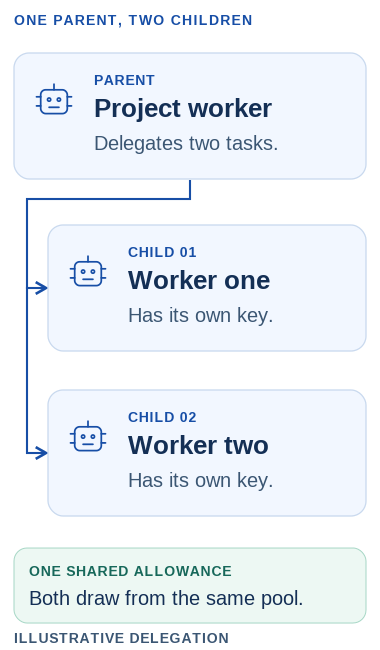
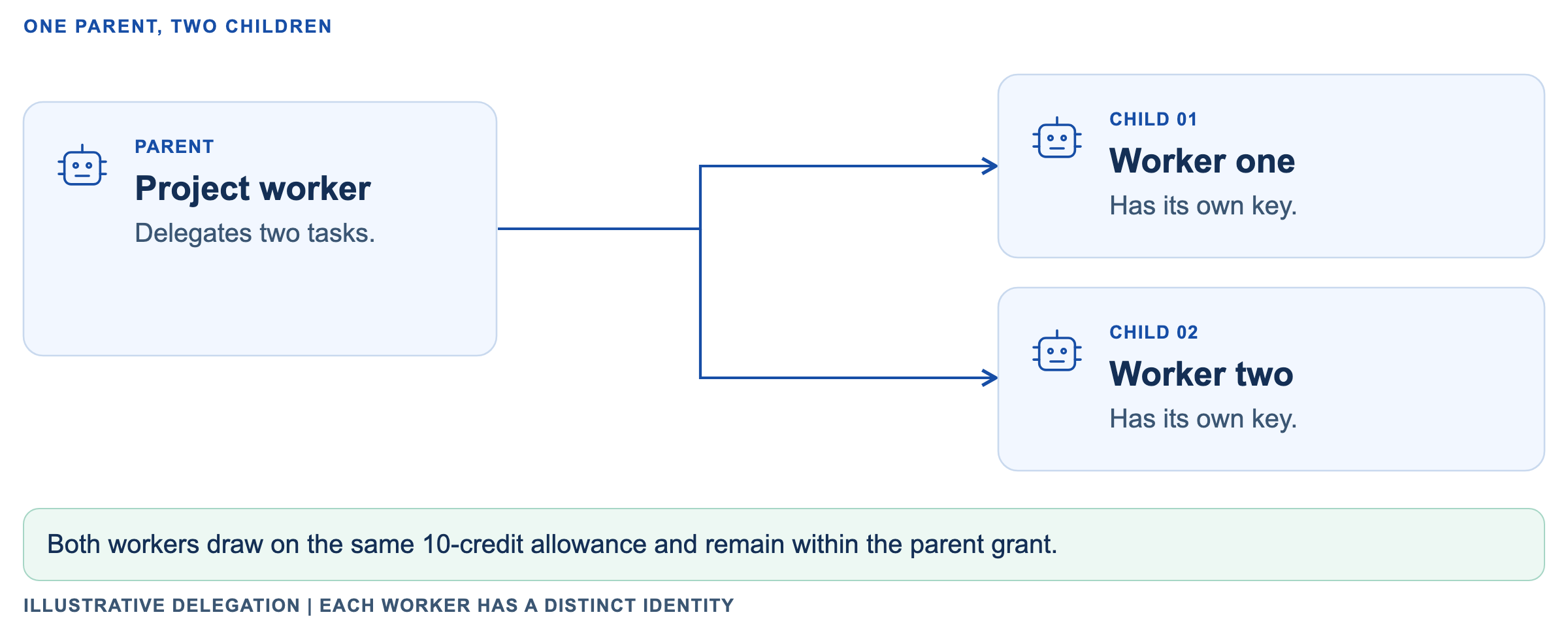
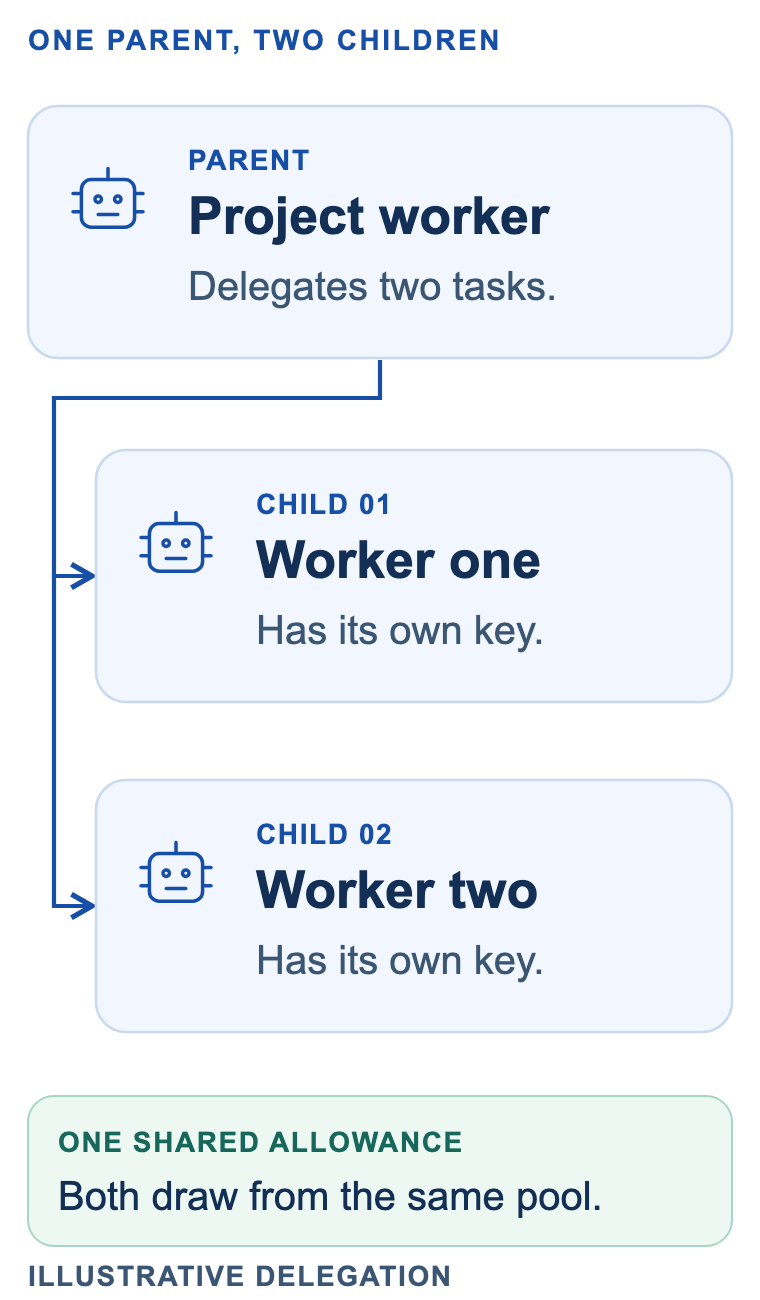
In the delegated task
- Parent
- Project worker
- Children
- Two distinct workers
- Budget
- One shared pool
Connect the agent host to the delegation issuer
The parent signs the child’s proposed terms, and the child signs its own request to join under those terms. The issuer checks the parent grant, the child’s runtime key and generation, and the proposed actions and expiry. It signs a child grant that names the same project and budget. A workload identity such as SPIFFE can help the host identify the service presenting that evidence.
Inspect the proof from person to grandchildRelated technology: SPIFFE workload identity overview