
Step 6 of 7
A lost reply leads back to the original charge
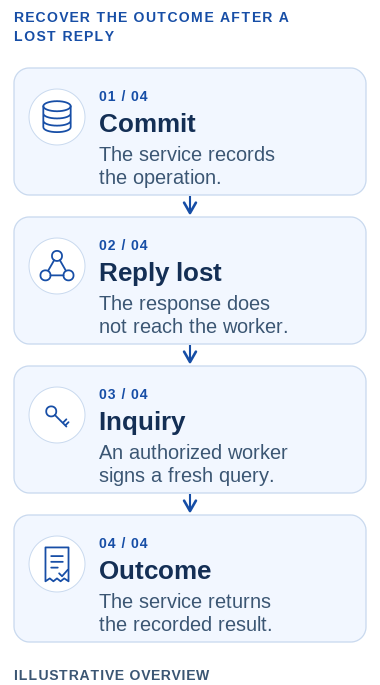
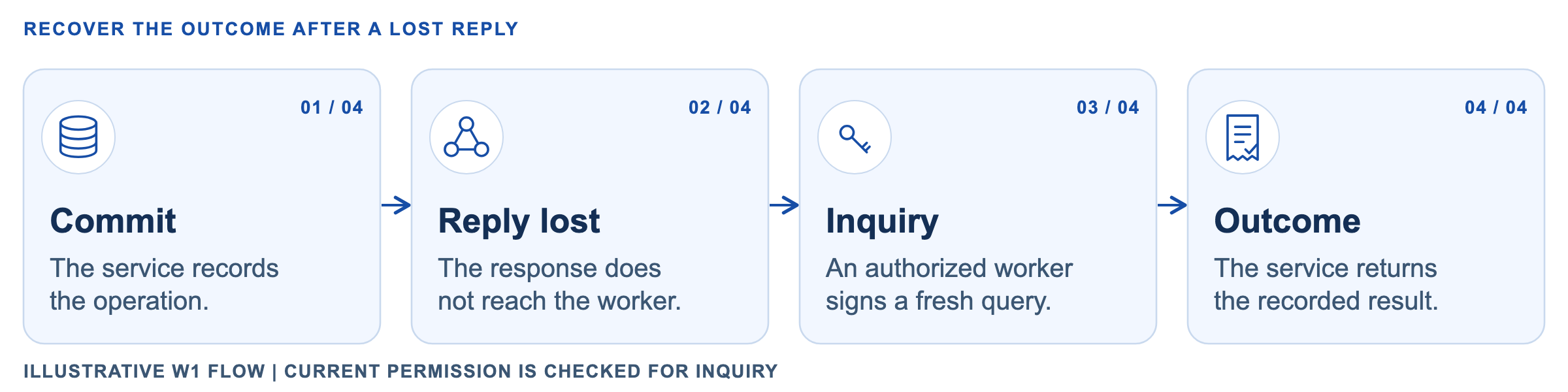
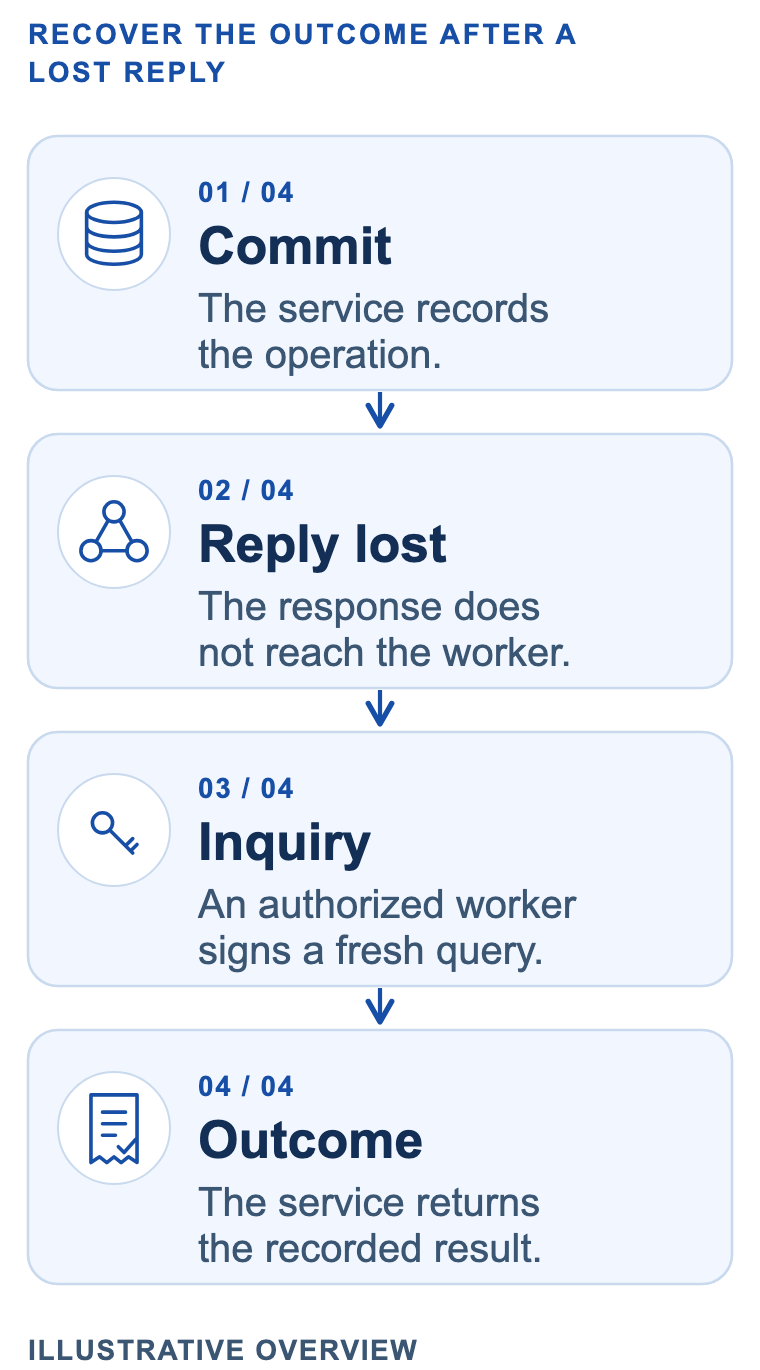
The provider records the six-credit charge just as the connection drops. The scientist still needs to know whether the account was charged. A worker authorized to look up the operation can recover the original outcome and use the remaining four credits to plan the next task.
During reconciliation
- Inquiry path
- /w1/status
- Lookup key
- Original operation ID
- Evidence
- Recorded account entry
Connect retries and recovery to durable account state
The original holder signs a fresh status request with its current grant and the original operation and intent. The provider checks lookup permission before returning the stored outcome. For a restart, the recovery service reconciles the latest independently retained checkpoint with the account history. The restored state preserves committed charges and recorded revocations.
Run the lost-reply and recovery casesIf a response is lost, the worker should inquire about the recorded operation rather than assume that it failed or repeat the effect.