
What a managed browser would have to verify
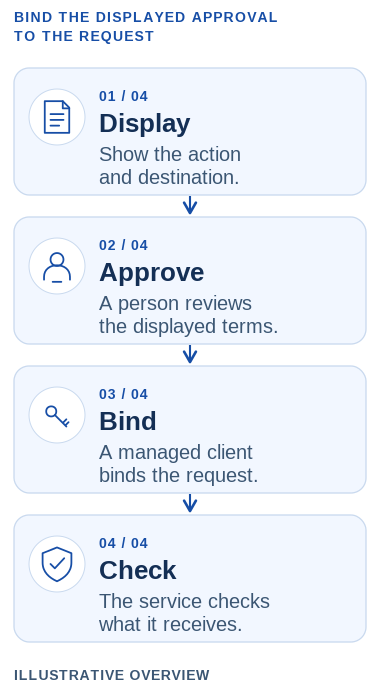
A person can approve the wrong destination if a page shows one recipient and the application sends another. The HTTP6 managed-client design asks how the browser or a native companion can bind the displayed destination and action to the exact approval the service will check. These are project design questions for browser and accessibility engineers.
A workspace the person and the service can identify
A managed W2 client would protect the approval display, input, and local key use. To evaluate it, an implementer would change the proposed recipient after the display step and verify that the revised request requires fresh approval.
Origins, scripts, and downloads
The native decision register groups browser work under ND-09. A team must define the origin, how embedded resources are retrieved, and how a downloaded file keeps its authorized destination. For related browser controls, see the Content Security Policy Level 3 working draft. The interface also has to expose the same decision to someone using a keyboard or a screen reader. W3C Web Content Accessibility Guidelines
Which evidence would answer the question
A browser trial should record the displayed terms, the approved request, and what the resource received. W1 supplies the HTTPS side of that comparison. Read the profiles · Read the decision register